Tropic Travelers is a tourism agency based in Banda Aceh Indonesia. Providing some tour packages include bicycle and motorcycle tours, Tropic Travelers bring great adventures! Please visit our website at http://tropic-travelers.org

Thursday, January 22, 2026

Story 4

 Telephone


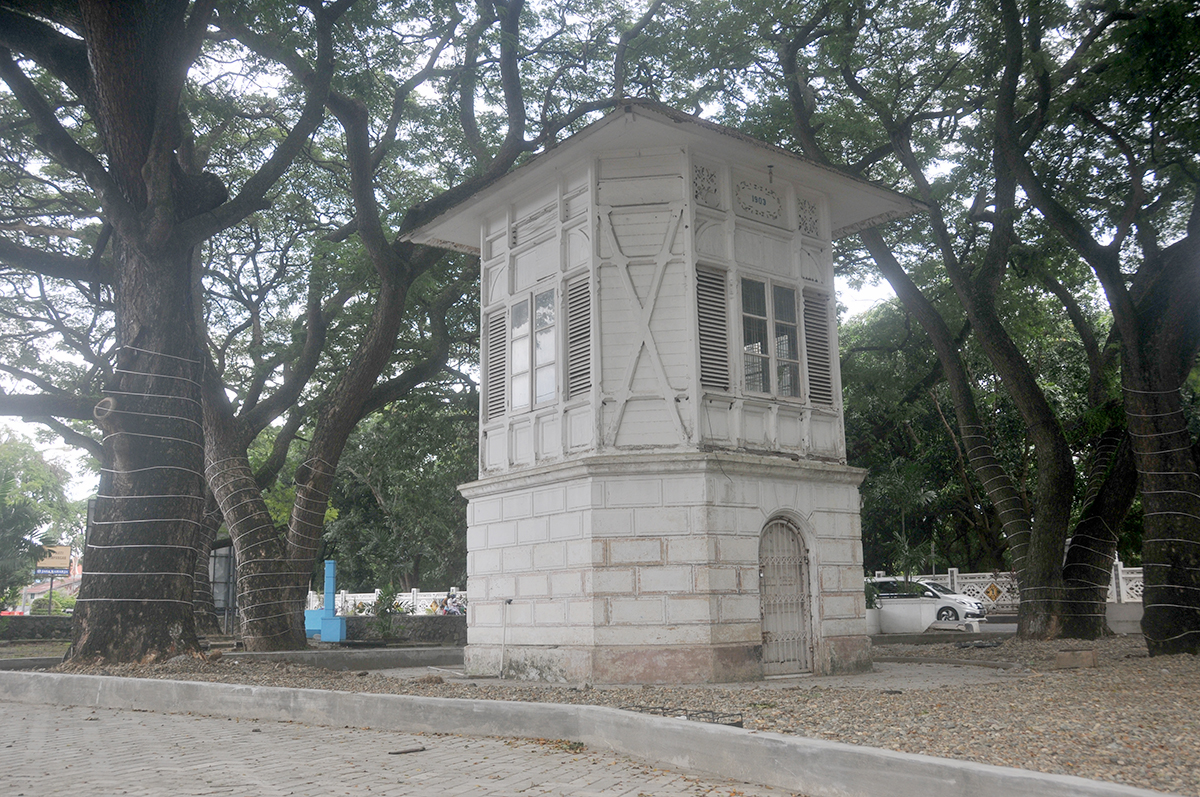
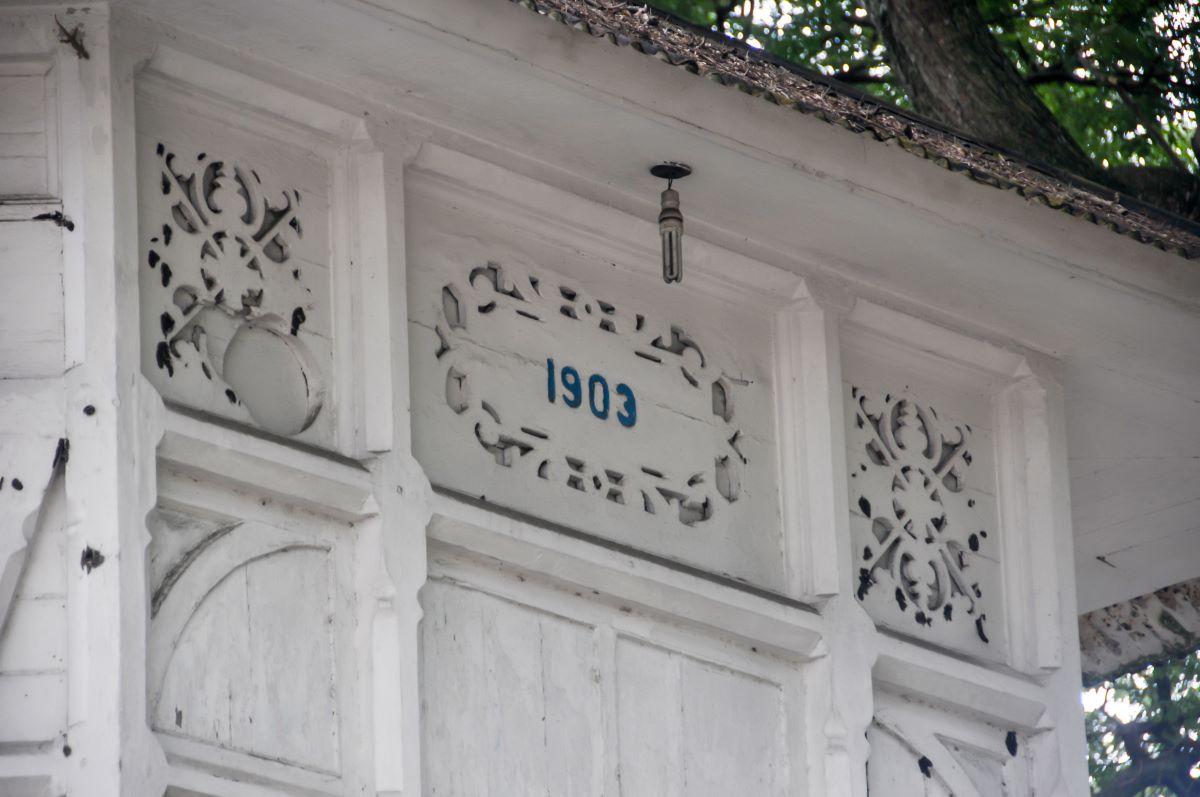
In 1903, all army posts on the Acehnese west coast were connected to a telephone line to the main base here in Koetaradja. From then on, reinforcements could be called for day and night in case of an emergency. The small white tower we're currently looking at used to be the end of this west coast telephone line.


On the top floor, the operator used to work. Downstairs, officers could deliver messages or make calls. The Acehnese west coast remained a very unsafe area well into the 20th century.


Acehnese surprise attacks were met with Dutch responses. Hendrik Colijn, who later would become Prime Minister of the Netherlands, used this telephone office very often as he was stationed on the west coast for many years. In a letter to his wife, he described his work.

When things finally settled down a bit in Aceh in the 1930s, non-military people were also allowed to use the telephone line. In Dutch archives, several Acehnese phone directories from those days have been saved, which give a fascinating insight into the colonial society in Koetaradja. The phone directories consisted of only a few pages.

A phone connection was so expensive that only a couple of people could afford it. The first page gives advice on proper telephone use. Users are advised not to use the phone when there is a thunderstorm.


Also, cursing, unpleasant, or rough language towards the Koetaradja operator was not permitted. The 1932 directory lists several civilian connections in Koetaradja. Amongst others, automobile shop Kolkenko, Ms. Huestra's flower stall, Dr. Van Bommel, specialized in internal diseases, high school teacher Ms. Huizing, Catholic Priest Van Vandersanden, also available at night in case of emergency.
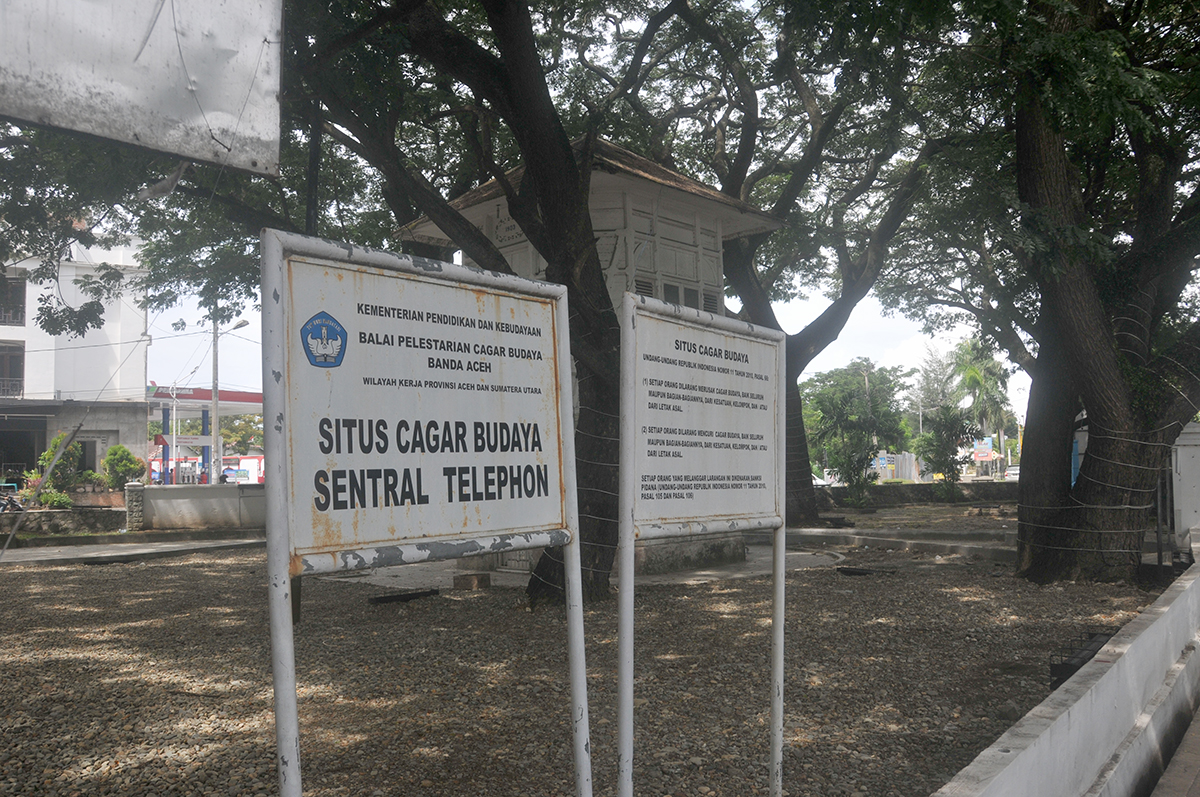


Today, it is difficult to imagine that all those people once lived in this city and called each other using this little telephone office in the middle of this now very busy traffic intersection. Presently, the building is used by the Indonesian Soccer Federation. Upstairs is an office. Downstairs, people are usually playing cards or dominoes. They are very friendly. If you like, you can ask to have a look inside.


Tuesday, January 20, 2026

Story 3

 The Great Mosque Baiturrahman


The Big Mosque was once the scene of very fierce fighting. In 1873, the Dutch General Köhler was killed here by an Acehnese sniper while he was overseeing the battle. The tree that stood next to him was for years afterwards known as the Köhler tree.

The original mosque that was located on this spot was burnt to the ground by the Dutch army, something that led to Acehnese religious leaders declaring a holy war against the Dutch. When the city of Kuala Raja was finally conquered by the Dutch, the colonial government started building a new mosque in 1879 in an attempt to appease the Acehnese. A lot of money was spent on the project.

Marble floors and iron cast ornaments were imported from Europe and the Dutch-Italian architect Bruins was given a free hand, a nice job for someone who, up till then, had only designed a couple of offices for the public works department. Up to the late 19th century, distinctive, uniquely Indonesian Islamic architecture existed on the Indonesian archipelago, incorporating Hindu and Buddhist influences. The traditional Indonesian mosque looked a bit like a Japanese pagoda, with pointed, terrace-style roofs.

Architect Bruins didn't care too much about these traditions. He found inspiration in the Ottoman and Mughal architecture, and the mosque he came up with was a fairytale-like building with a big black dome. Initially, it was ignored and detested by the Acehnese, but later it became something of a symbol for the city.

Not only was the building, which originally only had one dome, expanded to three and later even five domes, but its architecture was copied all over the Indonesian archipelago. Today, most mosques in Indonesia have domes like the Great Mosque of Banda Aceh instead of the traditional pointed roofs. The fact that this mosque was built by the Dutch shows their erratic behavior towards Islam.


The Dutch were totally unprepared for the holy war in which they suddenly found themselves. Endless talks in the Dutch parliament led to nothing but more confusion. Some Dutch politicians wanted to appease the Acehnese and order this mosque to be built.

Other politicians wanted to retreat, while still others wanted to burn as many rice fields and villages as possible in an attempt to discourage the Acehnese. Whatever they tried, the Dutch were spectacularly unsuccessful in Aceh. In 1889, the Dutch policies toward Islam took a new direction.

In that year, the famous but highly controversial Dutch Islamist Christiaan Snouck Hurgronje came to Aceh. Snouck Hurgronje pretended to be a pious Muslim. He had taken a pilgrimage to Mecca, was fluent in Arabic and Acehnese, and thus managed to gain the trust of the Acehnese.


While living in Aceh, he wrote two monumental anthropological books in which he thoroughly described the Acehnese culture and religion. But in addition, he wrote a secret third volume in which he advised the Dutch government how to defeat the Acehnese. Snouck Hurgronje proposed divide-and-conquer tactics, in which the non-political Islam and the traditional Acehnese nobility should be given full support by the Dutch.

When the Dutch put his advice into practice, they slowly but surely gained the upper hand in the war. In the 1920s to 1930s, most Acehnese resistance was broken. By that time, however, Snouck Hurgronje had already returned to the Netherlands.

In the Netherlands, he became the director of Leiden University.


Story 2

 Neusoeh

 Dutch Colonialism

Welcome to Koetaradja, as Banda Aceh was called in the colonial days. The field in front of us, lined by wooden barracks from the late 19th century, is one of the most important remains of colonial architecture in this town. The fact that these are all military, rather than commercial buildings, can be seen as a summarization of the Dutch presence in Aceh.


Life in the Dutch East Indies, in general, was all about making money, and visitors to other cities in present-day Indonesia can still see traces of this wealth when they look at the buildings that remain from the colonial days. Rows of fancy mansions, bank offices, headquarters of plantation companies, government buildings – almost every Indonesian city has at least a few. In Koetaradja, however, the Dutch never really managed to put making money on the agenda.

Before we continue with our tour, a very short history lesson. Towards the end of the 19th century, the Dutch controlled large parts of Sumatra. The Acehnese Sultanate, however, was still independent. A few hundred kilometers south of Aceh, the Dutch were making tons of money in the rubber and tobacco plantations, and they expected that annexing Aceh.

In addition to that, after the Suez Canal was opened in the 1860s, Aceh was suddenly a place of strategic importance, as all the ships going east passed Aceh. So without any real knowledge of the Acehnese culture, the Dutch went to war in 1873.

After many setbacks and much bloodshed, the city of Koetaradja was captured a few years later, but the rest of Aceh was by no means under Dutch control. Guerrilla warfare ensued. Instead of a trading center, Koetaradja turned into a giant army base.

The barracks we're looking at now used to be the homes of the European officers. While ordinary soldiers in the Dutch colonial army were mostly recruited in Indonesia, especially on Java or the Maluku Islands, the officers always came from Europe. All European nationalities were welcome.


The Dutch colonial recruitment center in Harderijk was in those days known as the Gutter of Europe due to the large numbers of criminals, failed students, or bankrupt people that enlisted to the Dutch colonial army, and subsequently ended up in Aceh. Presently, these barracks are still used by the Indonesian army. There are still officers living here.

On the opposite side of this field, the ordinary soldiers live in newly constructed houses and barracks. To really imagine living here in the colonial days, let's take a look at a diary of someone who used to live in one of these officers' houses around 1900, an officer named Terbest. I was transferred to the elite corps, Marechaussee, in Aceh.

There were many advantages. My salary was doubled, and I was given many liberties when I was at home in Neusoeh. Life was so good, I almost felt like a civilian.

No one dared shouting orders to a member of the elites. There were no parades. The food was excellent.

The guy who lived next door came from Germany, a wonderful fellow with whom I spent many pleasant hours. He knew a lot about German poetry. In those days, German schools were much better than Dutch schools, which was the reason many Germans got high positions in the colonial army.

After a while, however, my neighbor changed. Late at night, he would talk about impending doom. He would suddenly stand up and say, I had the feeling we will be attacked tonight, and other depressing things.

At first, I would try to cheer him up, but after a while, I realized he had just drunk way too much and couldn't really be helped. Eventually, he was transferred to Java. 

Still, I had a great time in Neusoeh. The houses were beautiful and quite cool on the inside.

Monday, January 19, 2026

Story 1

Dutch Colonialism

 A sad Story from

Poetjoet Kerkhoff gate


The Dutch graveyard. Kerkhoff Poetjoet was the largest military graveyard in the Dutch East Indies. In the entrance gate, names of all the soldiers who died in battle are engraved.


Note the letters behind their names. E stands for European, I for Inlander, or native, and there are even a couple of AFRs, African Recruits, from the Dutch colonies in Ghana. In the 1970s, this graveyard was completely overgrown and neglected.

A former officer of the colonial army started a foundation to keep the graveyard from disappearing completely. The foundation, based in the Netherlands, currently pays for the maintenance of Kerkhoff Poetjoet. On the left side of the gate lives the caretaker.

For those who are interested in learning more about the graveyard and the people who are buried here, he sells a beautifully illustrated visitor's guide. Before we enter the graveyard, let's listen to a description of a funeral written by Lieutenant Faubel in 1896. At the gate of Poetjoet, all officers who are in town are present, usually over a hundred people.

The train drives slowly and blows the steam horn when it gets close. All soldiers salute, the drums roll. Then the coffin is taken from the train.


The sword, hat, and medals of the deceased are placed on top of the coffin. Soldiers carry it through the gate while a brass band plays. Finally, the coffin is put in the ground.

Hats are taken off. Ceremonial gunshots are not allowed in Aceh as everyone is very edgy with all the Acehnese surprise attacks. We also need to save ammunition.

Still, a military funeral at Poetjoet leaves a big impression. Many tough soldiers who probably went to battle with the deceased are crying openly. Kerkhoff Poetjoet is a wonderful place to stroll around, with or without a visitor's guide.

Do not forget to take a look at the grave that is marked with the small sign, 42. Just follow the main path and take a right at the end. Here lies Henry de Brun, who once was a decorated officer in the colonial army.

In 1902, he only had one more tour of duty to fulfill before he would marry the daughter of the colonial in Koetaradja. But Henry was ambushed by the Acehenese and died. His body arrived in Koetaradja on the day he was supposed to get married.

His bride, who didn't yet know he was dead, was waiting for him, dressed in her bridal veil. Governor Van Hetz had to go to her and break the news. He said, my child, de Brun has arrived, but he's going to Poetjoet and not to you.

Now, over a hundred years later, Henry de Brun is still in Koetaradja. According to legend, his bride never remarried. She died many years later and is buried in an unmarked grave behind him.


Next Stories...

kratonlaan


Next Stories...

Telephone